Colosseum Underground Tours With Kids: Are They Worth It?
Is the Colosseum Underground worth it with kids? See what children actually see, the best ages, arena vs underground, ticket options and family-friendly tours.
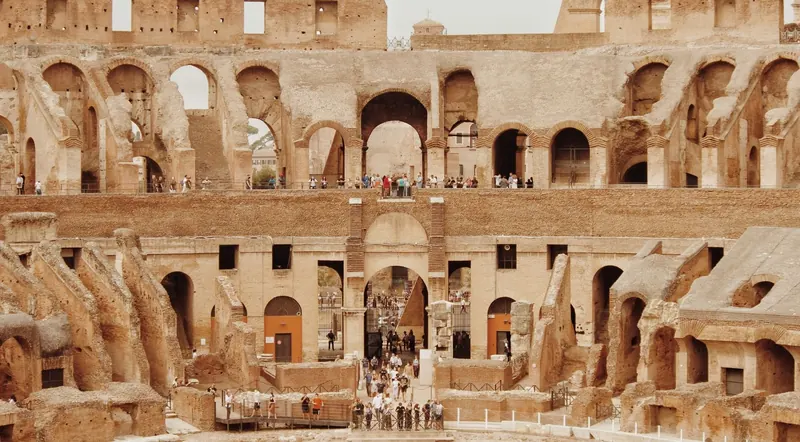
The Colosseum Underground sounds like the obvious ticket to buy with children. Secret passages. Gladiators waiting below the arena. Wild animals lifted through trapdoors. Ancient machinery hidden beneath the floor. (For what gladiators really did, and where they trained, see our separate guide.)
For the right child, it is exactly that good. But there is one thing to understand before paying extra: the underground is fascinating because of the story, not because it looks like an intact dungeon.
What survives is an archaeological network of corridors, foundations, lifting-system remains and working spaces beneath the arena. Children who understand what happened there can find it extraordinary. Younger children expecting dark tunnels and gladiator cells may find the reality less dramatic than the name suggests.
So is it worth it with kids? For curious older children and teenagers, very often yes. For younger children, the arena floor or a good family guide is usually the better upgrade. Here is how to decide — starting with what an underground tour costs on your dates:
Colosseum Underground with kids: the quick answer
We would choose the underground for:
- children roughly nine or ten and up who already know something about Ancient Rome;
- teenagers;
- children fascinated by engineering, animals or gladiators;
- families who enjoy guided history tours;
- repeat visitors who want something beyond the standard Colosseum route.
We would probably skip it for:
- toddlers;
- preschoolers;
- children who dislike guided tours;
- families with very limited time;
- children mainly excited about standing where the gladiators fought — for them, arena-floor access gives a bigger visual payoff.
Our family pick: if you have to choose between underground access with a mediocre tour and a genuinely engaging family guide with arena access, choose the better guide. The underground becomes special when somebody can reconstruct what happened around you.
What is underneath the Colosseum?
The area beneath the arena is called the hypogeum. Today you can see its exposed walls when you look down into the centre of the Colosseum. In Ancient Rome almost all of it was hidden beneath the wooden arena floor.
This was the backstage area of the amphitheatre. The official Colosseum Archaeological Park describes a vast underground structure covering roughly half a hectare, with 14 visible corridors arranged around a large central passage, and it was where preparations for the spectacles took place. It held the systems used for animals, gladiators and performers, scenery, props, cages, lifts, trapdoors and stage machinery.
Spectators above saw the show. The underground was where people made the show happen.
That is why it can work so well with children: it turns the Colosseum from a big Roman stadium into an enormous piece of ancient stage machinery.
More Rome experiences for families
Rome sells guided family versions of the Vatican Museums, the Pantheon and the catacombs too — from a Vatican Museums treasure hunt for kids to a private catacombs tour built for children:
What do children actually see on an underground tour?
Do not imagine a perfectly preserved maze of candlelit rooms. You are walking through archaeological remains. Children can see:
- the underground corridors;
- structural walls beneath the former arena;
- positions associated with ancient lifting systems;
- the relationship between the underground and the arena above;
- reconstructed or interpreted elements explaining how people, animals and scenery were raised;
- restricted areas that standard ticket holders cannot enter.
Depending on the tour and the route operating that day, the guide may explain the old freight elevators, winches, trapdoors and backstage organisation.
The park’s own interpretation of the machinery is particularly good material for children. At one stage the Colosseum had 28 animal lifts operated by winches, and the park says that running all 28 at once required 224 people — eight workers for each winch. Later systems increased the number of lifts further.
That is the sort of detail children remember. Instead of “here is another ancient wall”, you have: imagine more than 200 people underneath the floor pulling machinery so that animals could suddenly appear in front of tens of thousands of spectators.
That turns archaeology into a story.
Were gladiators kept underground?
This question comes up constantly with children.
The underground was certainly part of the operational backstage world beneath the arena, involving the people, animals, machinery and material needed for the spectacles. It is better not to describe the surviving underground as a neat row of gladiator prison cells, though. The hypogeum changed over centuries and was a complex working area.
A good guide should explain where people moved, how performers reached the arena, how animals were handled, how the lifts worked, and how the underground developed after the Colosseum first opened. For children, the most useful image is backstage at a giant Roman show, not a dungeon.
Why the underground was not there in this form from day one
This is one of the most interesting facts to explain to older children.
When the Colosseum opened in AD 80, its earliest underground installations were largely made of wood. Under Emperor Domitian the subterranean system was rebuilt in more permanent masonry. That mattered: once a permanent structure occupied the space below the arena, the Colosseum could no longer function as an open basin for the famous early water spectacles in the same way. Our full history of the Colosseum for kids tells the rest of the story.
The underground was then modified repeatedly over centuries, and it suffered major damage, including a serious fire in AD 217.
So children are not walking through one frozen moment in Roman history. They are seeing a structure that evolved as Roman entertainment became more technically complicated.
Is the Colosseum Underground scary for children?
Generally, no. This is an archaeological visitor route, not a horror attraction. The underground is open, interpreted and visited as part of controlled access through the monument.
The bigger question is not whether a child will be frightened. It is whether they will be interested. A child who hears “underground” and imagines a spooky tunnel adventure may be disappointed if nobody explains why the walls, corridors and machinery matter. That is why guiding counts for more here than in some other parts of the Colosseum.
What age is best for the Colosseum Underground?
No official minimum age defines when a child will enjoy the archaeological underground during a normal Full Experience visit. This is a family-travel judgement rather than a rule.
Under 5
Usually skip it. The main Colosseum provides enough excitement at this age — the huge building, the arena, the arches and the exposed underground seen from above. Paying more for a detailed restricted-area visit usually adds more for the adults than for the child, and a flexible standard ticket is easier.
Ages 5 to 7
Maybe, but choose the guide carefully. Children this age can become fascinated by lions, gladiators, trapdoors and ancient lifts, and they need storytelling to get there. A specialist family guide explaining Roman backstage may make the underground work brilliantly; a technical adult archaeology tour will not. Choosing between the underground and a kid-focused Colosseum tour, we would take the kid-focused guide.
Ages 8 to 10
This is where it starts becoming a strong option. Children can understand that what they see is the remains of a much more complicated machine, and they can connect the cages below, the lifts, the trapdoors, the arena above and the spectators in the stands. If they already like Romans, gladiators or engineering, the underground may become one of the highlights of Rome.
Ages 11 to 13
A very good age for the underground. Children are old enough to follow more historical explanation without needing everything turned into a game, and they appreciate entering an area that most standard-ticket visitors only look down on. This is the easiest family age range to recommend.
Teenagers
Often worth the upgrade. Teenagers can appreciate the engineering, the social history, the spectacle, the archaeology and the economics of mass entertainment. The restricted access also gives the visit a stronger sense of doing something beyond the standard sightseeing route.
Underground vs arena floor with kids
This is the decision many parents have to make: if you only want one special-access upgrade, which should it be?
Choose the arena floor if your child mainly loves gladiators, wants a dramatic photo, is younger, prefers visual experiences, has a shorter attention span, or wants to stand where the action happened. The arena is immediately understandable — you step into the middle of the Colosseum and look up at the surrounding seating. No long explanation is needed.
Choose the underground if your child asks how things work, loves engineering, enjoys detailed history, wants to know where animals came from, already understands the basic gladiator story, or is an older child or teenager. The underground answers the question: how did the Colosseum actually produce its spectacles?
The best option if budget allows
A Full Experience Underground and Arena visit gives you both, and it creates a natural story: see what happened beneath the arena, understand how animals, performers and scenery were prepared, step onto the arena, then imagine the moment when everything appeared in front of the crowd.
For older children, that is the strongest version of the Colosseum experience. The Colosseum, Underground, Roman Forum & Palatine Tour is the cleanest guided version: underground, arena, Forum and Palatine are all in the inclusions rather than offered as alternatives, the group is capped at seven, and it rates 5.0/5 from 92 reviews — the highest score of any Colosseum tour we track, from a smaller base than the big-volume listings.
Official Underground ticket: what does it include?
The official product is called Full Experience Underground and Arena, and as checked in September 2026 the full adult ticket costs €24. It includes:
- Colosseum Underground;
- arena floor;
- Colosseum Museum;
- Roman Forum;
- Palatine Hill;
- several additional SUPER sites;
- current exhibitions.
The ticket is valid for two consecutive days, and the maximum time inside the Colosseum for this ticket type is 90 minutes.
That two-day validity is especially useful for families. You do not have to force the Colosseum, Roman Forum and Palatine Hill into one exhausting Ancient Rome marathon — you can separate them.
When do official Underground tickets go on sale?
Official Full Experience Underground tickets are released online beginning 30 days before the visit date. The Colosseum entry time is compulsory, and underground access is capacity-controlled. Availability is therefore more limited than standard admission.
This is one of the Colosseum products to plan around rather than assume you can buy on the day. If the underground is a priority for your family: know your Rome date, check availability as the 30-day window opens, have a backup plan, and compare reputable guided inventory if the official option is gone.
Are children free on the official Underground ticket?
Visitors under 18 qualify for free admission under current Colosseum rules. However, Full Experience Underground and Arena still requires a specific online booking, because underground capacity is limited. Do not assume a child can accompany a paying adult without their own reservation.
Remember too that a commercial underground tour can charge a child for guiding, headsets, organisation and other tour-company services. So “under-18 admission is free” does not make every underground tour free for children. Always compare the total family price.
Official Underground ticket vs guided Underground tour
This is the most important booking decision. The official €24 ticket is obviously cheaper than a commercial guided tour, so why pay more?
Because the underground is one part of the Colosseum where interpretation adds a lot. Without context you are looking at ancient corridors and structures. With a strong guide you understand what originally covered the underground, where the lifts operated, how animals reached the arena, how scenery appeared, how many people worked behind the scenes, and why the underground changed over time.
Choose the official ticket if your family already knows Roman history, you are comfortable using the official audio guide, budget matters, your children like self-guided sightseeing, or you want the two-day Full Experience flexibility.
Choose a guided underground tour if your children ask lots of questions, you want somebody to make the machinery understandable, this is your only Colosseum visit, your children are roughly school age or older, or you prefer a structured experience.
The wider version of this comparison is in our guide to official Colosseum tickets vs guided tours for families.
Best Colosseum Underground tour formats for families
We would not choose by price alone. These are the three formats worth comparing.
A small-group underground tour — best overall for families
Best for: school-age children and teenagers.
A small group matters more underground than almost anywhere else, because everyone needs to stay close enough to see what the guide is pointing at. Six or seven people means children can hear the guide, ask questions, move close to whatever is being explained, and keep the group in sight.
The max-seven-person underground, Forum and Palatine tour is the one we would book first. Its highlights describe walking the corridors and rooms where gladiators prepared and seeing the trapdoors, pulleys and elevators, which is the material that makes the visit work for children.
The downside is length. A tour that adds the Forum and Palatine can run three hours or more, which is a lot for younger children and much more appealing for older kids and teenagers.
An arena-or-underground tour — best when you want to compare both
If you are still weighing the two upgrades, the Colosseum Arena Floor or Underground Tour is the clearest listing to read, because it sets both options out separately, item by item, and states that the €24 official entry ticket is included either way. It rates 4.8/5 from more than 440 reviews and runs as a small group, at roughly half the price of the max-seven tour above.
One thing to get right at checkout: the arena option on that listing does not include the underground. The listing says as much in plain words. It is also the single most common way families end up paying for an upgrade they did not want.
A high-volume Colosseum and Forum tour with an underground option
For families who care more about a big review record than about the smallest possible group, the Colosseum & Forum tour with optional arena or underground access carries 4.7/5 from more than 3,200 reviews — by far the largest base of any of these. Underground access comes only with its guided-route option, so read the option name before you pay.
It is the format to pick when Ancient Rome is a major interest, when your children can comfortably walk for three hours, and when you want context beyond the Colosseum itself. Skip it when the Colosseum is already enough for the day, when your child tires quickly, or when you are visiting in very hot weather. Including more monuments does not automatically make a family tour better.
That option-reading point is the recurring theme of all three. Some Colosseum listings sell arena, standard access, underground and a Forum add-on under one page, and the cheapest selectable option is rarely the one with the underground in it. Look specifically for Underground in the selected option before payment.
One product the older guides still recommend here — GetYourGuide’s dedicated Colosseum Underground small-group tour, listing 217308 — no longer resolves to a bookable activity, so the max-seven tour above is now the closest thing to an underground-focused option.
A warning about underground availability
Restricted access is more vulnerable to operational changes than a basic Colosseum visit. In February 2026, for example, the official park temporarily closed the underground because of heavy rainfall.
That does not make closures common. It does mean special access can occasionally change for safety or operational reasons, which is worth remembering before you present the underground to a child as a guaranteed highlight.
If it is essential to your trip, read the tour’s cancellation and change policy, check messages from the operator, and look at the official park notices before you leave your hotel.
Is the underground accessible with mobility issues?
The official Colosseum Archaeological Park states that underground access for visitors with mobility difficulties is supported by a freight elevator, and the wider Colosseum has accessible routes and lifts between levels.
Accessibility can still depend on the exact route and tour product. If a child or family member uses a wheelchair or has significant mobility needs, do not rely on a generic tour description. Check the official accessibility information, the specific operator’s route, and whether all sections included in that commercial tour are accessible.
This matters especially when the product also includes the uneven Roman Forum and Palatine Hill.
Is the Colosseum Underground claustrophobic?
For most visitors the underground is not comparable to squeezing through a narrow cave. The route runs through a large archaeological structure beneath the arena.
That said, a child with a strong fear of enclosed or below-ground spaces is individual. If your child is anxious about underground attractions, show them photographs or videos of the hypogeum before booking. The space looks far more like exposed archaeological corridors than a tiny tunnel.
How long does the underground visit take?
The official Full Experience ticket allows a maximum 90-minute stay inside the Colosseum. Commercial guided tours vary, and many combine the Colosseum, underground, arena, Roman Forum and Palatine Hill, which can push the whole thing to three hours or more.
So always check whether the advertised duration means the underground only, the entire Colosseum, the Colosseum plus Forum, or all of it including the Palatine. A three-hour underground tour does not mean three continuous hours underground.
Is it worth it if you can already see the underground from above?
A fair question. Standard visitors can see much of the exposed underground structure from the normal Colosseum levels, so are you paying to stand closer?
Not really. From above you see the pattern. From inside you understand the scale and function. Being within the corridors makes it easier to grasp the height between the underground level and the arena, how hidden the machinery once was, how much infrastructure sat beneath the spectacles, and how complicated the building was to operate.
For a child interested in how it worked, that difference is meaningful. For a child who wants the iconic Colosseum view, standard entry may be enough.
Should you do the Underground and Roman Forum on the same day?
You can, and you do not have to. The official Full Experience ticket is valid for two consecutive days, which is excellent for families. A sensible plan:
Day 1 — underground and arena Colosseum visit, lunch, then something completely different in Rome.
Day 2 — Roman Forum, Palatine Hill, and stop when the children have had enough.
That is often more enjoyable than extracting maximum value by visiting every included ruin back to back.
Best time of day for an Underground tour with kids
For families, earlier tours generally work better: children have more energy, Rome is cooler in warm months, the rest of the day stays flexible, and delays do not push lunch too late.
This matters particularly if the product continues into the Forum and Palatine Hill, where most of the walking is outdoors; our guide to the best time of day to visit the Colosseum with kids covers each season. Outside summer, later times are perfectly reasonable — just remember that Colosseum closing hours shorten seasonally.
What about the Colosseum night Underground tour?
For older children and teenagers this can be one of the most atmospheric alternatives. In 2026 the official A Night at the Colosseum series ran on selected Tuesday and Thursday evenings from 7 July to 29 September; 2027 dates are not yet announced. The guided route lasted about 60 minutes and included the first tier, the arena floor and the underground, with interpretation of the spectacles and the underground machinery.
Night visits are sold only through the official Colosseum website.
It is good for older kids, teenagers, families wanting a shorter guided experience, and anyone who likes atmospheric evening sightseeing. It is less good for young children with early bedtimes, or for a family already exhausted after a full day of Rome sightseeing.
How to prepare children before an Underground tour
Ten minutes of preparation can improve the experience dramatically. Explain four things before you go.
1. The underground was invisible to spectators. The arena floor covered it. People watching above were not staring down into these corridors the way visitors do today.
2. Animals could appear through the floor. Ancient machinery raised animals and scenery upward. That is the magic trick children should be imagining while they walk below.
3. Hundreds of people worked behind the scenes. The Colosseum was not operated by a handful of gladiators. The park’s figure of 224 workers for one 28-lift system is a brilliant fact for children.
4. The arena above was wooden. Children often assume the exposed underground was always visible. Explaining that they are looking at the backstage area, because much of the original floor is gone, makes the whole architecture easier to read.
Questions to ask children while you are there
You can turn the visit into a game without a formal scavenger hunt. Ask:
- How do you think an animal got from here to the arena?
- Why would spectators not be allowed to see the backstage area?
- How many people would it take to run all these lifts?
- Would you rather be a gladiator, a spectator or a worker below the arena?
- What would be the hardest part of organising a show for 50,000 people?
- How would the people underground know when to raise an animal?
- What would happen if a lift broke?
What should families bring?
Keep it simple: ID matching the ticket names, comfortable shoes, water, sun protection for the outdoor parts, and a small snack for before or after the tour.
The underground is only one part of most guided products. The Roman Forum and Palatine Hill involve significant outdoor walking over uneven ancient surfaces. Do not judge the footwear requirement on the word underground.
Underground tour vs private family tour
If your budget allows only one premium upgrade, this is the other useful comparison.
Choose the underground tour if your children are older, they love history, special access matters, and they enjoy standard guided tours.
Choose a private family tour if your children are younger, keeping their attention is the main concern, you want quizzes and games, siblings are different ages, or you want the guide to adapt to your family. The Private Colosseum & Ancient Rome Family Tour for Kids is the one we would compare against, at 4.8/5 from 154 reviews, with the activities pitched to your children’s ages.
For a six-year-old, how the Colosseum is explained matters more than seeing every access level. For a thirteen-year-old who loves Ancient Rome, underground access may be exactly the right upgrade.
Is the Colosseum Underground worth the extra money?
For the right family, yes. We would pay extra when three things are true:
- the children are old enough to understand what the underground represents;
- the tour includes a strong guide;
- Ancient Rome is one of the important parts of the trip.
We would save the money when the children are very young, when everybody hates organised tours, when the family mainly wants the classic Colosseum experience, or when arena access would create the same excitement for less effort.
The underground is not a compulsory part of visiting the Colosseum. It is a specialist upgrade, which is exactly why it can be so rewarding when it matches the child.
Frequently asked questions
Is the Colosseum Underground suitable for kids?
Yes. It is particularly suitable for older school-age children and teenagers who are interested in gladiators, animals, engineering or Roman history.
What age is best for the Colosseum Underground?
There is no single official age recommendation. From a family-travel perspective, we would generally consider it most worthwhile from roughly ages 8 to 10 upward, depending heavily on the child’s interests.
Is the Underground scary?
It is an archaeological visitor area, not a horror attraction. Most children are more likely to find the history interesting than frightening.
Is the Underground dark?
It sits below the arena, but visitors tour an interpreted archaeological space rather than entering an unlit cave system.
Can children see where gladiators waited?
The underground lets visitors explore the backstage world associated with the spectacles and the movement of people, animals and equipment. Do not expect a set of perfectly preserved, labelled gladiator cells.
Does the official Underground ticket include the arena?
Yes. The current Full Experience Underground and Arena ticket includes both.
How much is the official Colosseum Underground ticket?
As checked in September 2026, the official Full Experience Underground and Arena full-price adult ticket is €24.
Are children free?
Under-18 visitors qualify for free admission under current rules, but the underground has controlled capacity and children still need the correct online reservation. Commercial guided tours may charge for guiding and other services.
How far ahead can I book?
Official Colosseum ticket sales open 30 days before the visit date.
Is arena access better than Underground access for children?
For younger children, or children mainly interested in gladiators, often yes — the arena has a more immediate visual impact. The underground is usually better for children interested in how the Colosseum worked.
How long can you spend in the Colosseum with a Full Experience ticket?
The official Full Experience Underground and Arena ticket permits a maximum Colosseum stay of 90 minutes.
Can I visit the Forum on another day?
The Full Experience ticket is valid for two consecutive days, so families can separate the Colosseum from the Roman Forum and Palatine visit within the ticket conditions.
Can the Underground close unexpectedly?
Operational or weather-related closures can occur. In February 2026, heavy rainfall caused a temporary underground closure. Check official notices and operator messages before your visit.
Is the Underground accessible for wheelchairs?
The official park states that access to the underground for people with mobility difficulties is supported by a freight elevator. Always check the exact commercial tour route if you have specific accessibility requirements.
The bottom line
The Colosseum Underground is one of the best special-access experiences in Ancient Rome — and it is not automatically the best Colosseum ticket for every child.
For younger children the arena floor is simpler, more visual and easier to understand. For older children the underground can be far more interesting, because it shows them that the Colosseum was not simply a stadium. It was a machine. Beneath the arena were corridors, workers, animals, scenery, winches, cages and lifts, all hidden from the audience above.
That is the story that makes the underground worth paying for. If your child is old enough to ask how did they make all of this work?, this is probably the part of the Colosseum they should see.
Next, compare the two upgrades side by side in our guide to Colosseum tickets for families, or see which guided tours suit which ages in the best Colosseum tours for kids and families.
Turn the Colosseum Into a Family Adventure
Skip the lines and explore Ancient Rome with a guide who knows how to keep kids engaged — gladiator tales, arena access and hands-on activities the whole family will love. Free cancellation on most tours.
Check Availability & Book